
Confidential Paternity DNA Test in India: A Private Way to Confirm Fatherhood
Some family situations require a private biological confirmation for their needs. A parent may want to confirm the paternity of their child without informing any other member of the family. It often happens during untrustworthy situations, or when starting such a conversation with the partner feels difficult or unwise. In such moments, a paternity DNA test done confidentially provides a private and reliable way to find clarity. It allows one person to seek the truth on their own terms, without waiting for another party’s involvement or approval.
What Makes a DNA Test Confidential?
A regular paternity test usually needs the consent of both parents before it can move forward. The mother and the alleged father typically agree together to have the child tested. But life is not always this simple. There are cases where one parent wants answers, and the other is unwilling, unavailable, or unaware.
A confidential paternity DNA test allows an individual to arrange sample collection and receive results without involving any other family member, except for the child. The report stays private and is shared only with the person who requested it.
The Need for a Confidential Paternity Confirmation
There are several common reasons someone might prefer a private testing route over a standard one:
- Discretion: The person wants to keep the matter away from family members, neighbors, or colleagues until they have clear answers.
- Disagreement: One parent agrees with the DNA testing procedure while the other refuses to take part or even discuss it.
- Sensitive Circumstances: The topic touches on strained relationships, past disputes, or delicate family history that the person does not want to reopen prematurely.
- Simple Convenience: Some people simply prefer a secretive, less formal process before deciding whether to pursue anything further, including legal steps.
Each of these situations calls for a testing method that respects privacy while still giving a dependable answer.
Types of Samples Used in DNA Testing
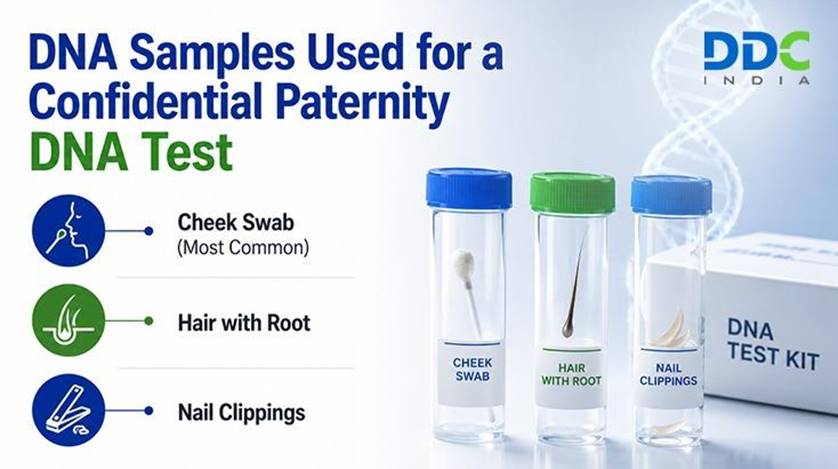
A standard paternity test usually relies on a cheek swab, as it’s a non-invasive and safe method for accurate test results. However, a confidential DNA test may require different DNA samples due to its discreet nature. If the other party is unaware of the DNA test, collecting a cheek swab becomes impossible.
In these situations, other sample types can be used instead, including:
- Strands of hair, ideally with the root attached
- Nail clippings
These alternative samples first go through a short viability check to confirm whether they contain enough DNA material. Once their viability is confirmed, the sample type itself does not affect the reliability of the final result. A well-preserved hair or nail sample can also deliver the same clear outcome as a standard cheek swab.
The DNA Testing Process for a Confidential Paternity Test
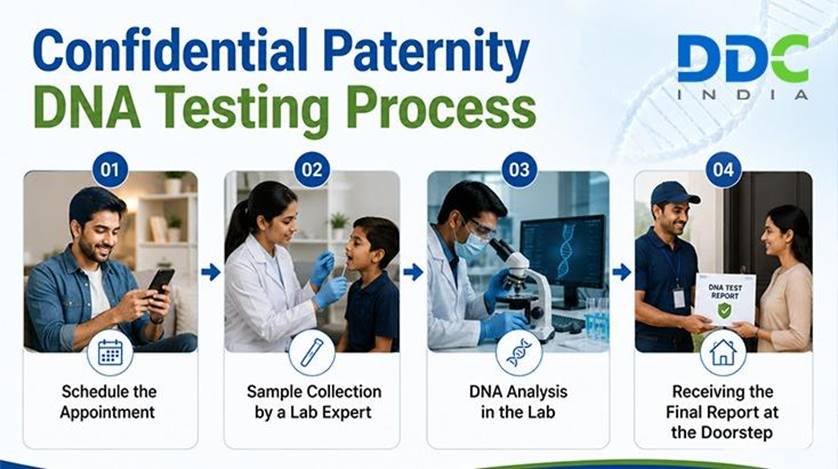
Getting a confidential test done is a fairly simple journey from start to finish:
Step 1 – Reaching Out: The person contacts a testing provider and explains their situation, including which sample type is available and where collection should take place.
Step 2 – Choosing a Collection Method: Samples can be collected at a lab facility, at home, at the office, or through a self-collection kit ordered online and mailed back for analysis.
Step 3 – Laboratory Comparison: Once the samples arrive, lab experts study the child’s genetic profile against the alleged father’s profile, checking for matching markers between the two.
Step 4 – Result Delivery: The final report is shared only with the person who booked the test, keeping the outcome fully private.
The result of this test is expressed as a percentage of matches, known as inclusion. A reading close to 99.99 percent inclusion confirms that the man tested is the biological father. A 0 percent reading rules out any biological connection between the two. There is rarely a confusing middle ground, which is what makes this method so useful for people who need a clear, dependable answer.
Why Choose DDC Laboratories India for a Paternity DNA Test?
DDC Laboratories India is a trusted name for this type of testing across the country. The lab offers a paternity DNA test through a testing facility visit, home or office sample pickup, or a self-collection kit that can be ordered and used privately at a location of one’s choosing. This flexibility makes the process easier for people who want to avoid visiting a clinic in person.
Beyond paternity, the lab also supports confidential testing for maternity questions, giving mothers a similar private route to confirming a biological connection with a child when needed.
Most confidential test reports are ready within four to five working days from the time samples reach the lab. For those who need answers sooner, an express testing service is available at an added cost, cutting down the waiting period considerably for people facing time-sensitive personal decisions.
Final Words
Confidential DNA tests exist for the sole purpose of seeking biological confirmation while keeping all information private. Therefore, when someone discreetly needs a straightforward answer, such DNA testing procedures help get accurate and reliable information. With painless sample collection, dependable results, and a private reporting process, this DNA test gives people a dependable path toward finding the genetic truth.
Frequently Asked Questions
Q1. Is a confidential paternity DNA test legal in India?
Yes, it is legal for personal use. However, since it is done without the consent of both parents, the report cannot be used as evidence in court.
Q2. What samples can be used if I cannot get a cheek swab or blood sample?
Hair with the root attached or nail clippings can be used instead. These go through a quick check to confirm enough DNA material is present for test accuracy.
Q3. How long does it take to get results?
Standard results are usually ready within four to five working days. An express option is also available for those who need answers sooner.
Q4. Can I collect samples from home instead of visiting a lab?
Yes. Samples can be collected at home, at the office, or through a self-collection kit ordered online, giving flexibility to those who prefer not to visit a testing facility in person.