
How Modern Messaging Platforms Are Changing the Way People Communicate
Communication has changed dramatically over the past two decades. Traditional phone calls and text messages have gradually been joined by social networks, video conferencing platforms, collaborative workspaces, and instant messaging applications. Today, people expect communication to be fast, convenient, accessible across multiple devices, and capable of supporting far more than simple text conversations.
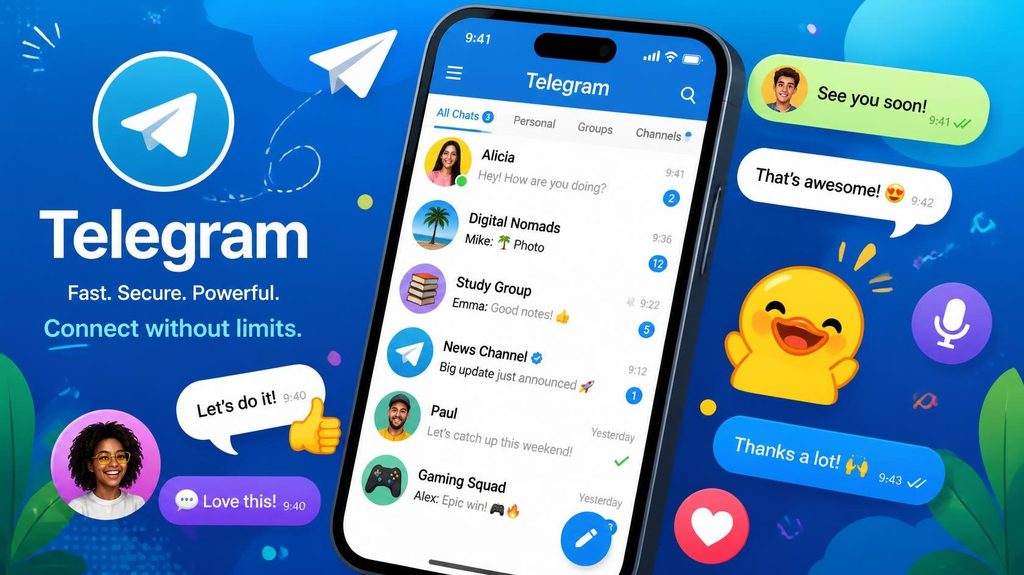
Among the platforms that have contributed to this transformation is Telegram. What began primarily as an instant messaging service has developed into a broader communication environment where individuals, communities, creators, businesses, and organizations can interact in different ways. Its combination of messaging, file sharing, group communication, channels, and privacy-oriented features has helped it become part of the daily digital routines of millions of users.
For anyone interested in exploring the platform, Telegram provides access to information and resources related to the service.
The Evolution of Digital Communication
Communication technology has always followed a simple pattern: people adopt tools that make interaction faster and easier. Email reduced the dependence on physical letters, mobile phones made real-time communication possible from almost anywhere, and social networks introduced new ways to communicate with large audiences.
Instant messaging took another significant step forward by allowing conversations to happen in real time without requiring users to make a phone call. Instead of sending individual SMS messages, people could communicate through internet connections, share multimedia files, create group conversations, and maintain ongoing discussions.
Modern messaging platforms have continued this evolution. They are no longer limited to one-to-one conversations. A single application can now support personal chats, large communities, broadcast-style communication, document sharing, voice communication, and automated services.
This shift has changed what people expect from communication software. Users increasingly want one platform that can handle several different communication needs without requiring them to constantly move between applications.
Why Instant Messaging Remains So Popular
One of the biggest reasons instant messaging continues to grow is convenience. People can communicate without worrying about traditional SMS limitations or international calling costs. As long as an internet connection is available, conversations can take place across countries and time zones.
Another advantage is immediacy. Messages can be sent and received within seconds, making instant messaging useful for both casual conversations and time-sensitive communication.
Modern platforms also support different forms of content. A conversation might begin with a text message, continue with a photograph, and eventually include a document, voice message, or video. This flexibility makes digital communication more natural and versatile.
For international users, these advantages can be particularly important. Friends and families living in different countries can remain connected without relying exclusively on expensive international communication services.
More Than Just Private Conversations
A major development in messaging technology is the transition from private communication to community-based communication.
Traditional messaging is generally centered around individual conversations or small groups. Modern platforms can support much larger communities, allowing people with common interests to communicate, exchange information, and participate in discussions.
These communities can focus on almost anything: technology, education, entertainment, hobbies, professional industries, local events, or specialized interests.
Channels and broadcast-style features also provide another communication model. Instead of expecting every member to participate equally, administrators or content creators can distribute updates to an audience. This makes messaging platforms useful not only for conversations but also for publishing information.
The result is a hybrid environment combining elements of traditional messaging, social media, forums, and content distribution.
The Growing Role of Messaging in Business
Businesses have also recognized the value of instant communication.
Customer expectations have changed alongside consumer technology. People often prefer receiving quick answers through messaging rather than waiting for an email response or navigating a complicated telephone menu.
Small businesses can use messaging platforms to communicate with customers, distribute announcements, answer questions, and maintain relationships. Larger organizations can use them for communities, notifications, internal communication, and customer engagement.
Messaging can also be valuable for independent professionals and creators. A photographer, consultant, educator, developer, or online entrepreneur can build a dedicated audience and communicate directly with people who are interested in their work.
This direct relationship can be particularly useful in an environment where algorithms increasingly determine what users see on conventional social networks.
File Sharing and Digital Collaboration
Another important feature of modern messaging applications is the ability to share files.
Communication frequently involves more than words. People exchange photographs, presentations, PDFs, spreadsheets, videos, and other digital materials every day. Having file-sharing functionality within a conversation eliminates the need to switch between several applications.
For remote workers and distributed teams, this can make communication more efficient. A discussion can happen alongside the relevant files, allowing participants to keep context in the same place.
Of course, messaging platforms should not automatically replace dedicated document-management or enterprise collaboration systems. Businesses handling sensitive or highly regulated information should evaluate security, compliance, access controls, and organizational requirements before choosing a communication platform.
Nevertheless, integrated file sharing has made messaging applications significantly more useful than the simple texting services of the past.
Privacy Has Become an Important Consideration
As people spend more time communicating online, privacy has become a major consideration.
Users increasingly want to understand how their information is handled, who can access their conversations, and what security measures are available. This has encouraged messaging providers to compete not only on convenience but also on privacy-related features.
However, privacy should never be treated as a simple label. Different platforms implement security differently, and individual features may have different protections. Users should review official documentation and understand the distinction between concepts such as encryption, account security, device security, and privacy settings.
Personal responsibility is equally important. Strong passwords, two-factor authentication, careful management of active sessions, and awareness of suspicious links can significantly improve account security.
No communication platform can completely eliminate the risks associated with careless digital behavior.
The Importance of Digital Communities
One of the most interesting developments in messaging is the growth of digital communities.
People have always gathered around shared interests, but the internet has removed many geographical barriers. Someone interested in a highly specialized subject can now find thousands of people around the world who share the same interest.
Messaging communities can provide a more immediate environment than traditional forums. Members can ask questions, exchange recommendations, share resources, and participate in ongoing discussions.
For newcomers, these communities can also be educational. Instead of searching through hundreds of disconnected websites, users can interact directly with people who have practical experience.
However, large communities require responsible moderation. Without clear rules and active administrators, discussions can become difficult to manage. Spam, misinformation, harassment, and irrelevant content can reduce the value of an otherwise useful community.
Effective moderation therefore remains an important part of building healthy digital spaces.
Choosing the Right Communication Platform
There is no single messaging platform that is perfect for every person or organization.
The right choice depends on what users actually need. Someone primarily interested in private conversations may have different priorities from a business managing a large customer community. Likewise, a content creator may care more about audience distribution, while a company may prioritize administrative controls and compliance.
Before adopting any platform, users should consider several factors:
- Security: What protections are available for accounts and conversations?
- Privacy: What information does the service collect and how is it handled?
- Features: Does the platform support the types of communication users require?
- Accessibility: Can conversations be accessed conveniently across different devices?
- Community tools: Are groups, channels, moderation, and administration features available?
- File sharing: Can users easily exchange the types of files they need?
- Reliability: Does the service provide a dependable communication experience?
Thinking about these factors can prevent users from choosing a platform simply because it happens to be popular.
Communication Is Becoming More Flexible
The future of communication is unlikely to be defined by a single format.
Text will remain important, but people will continue combining text with voice, video, images, documents, automated tools, and online communities. The boundaries between messaging applications and other digital platforms are already becoming less distinct.
This convergence reflects a broader change in how people use technology. Instead of viewing communication as a separate activity, users increasingly expect it to connect naturally with work, entertainment, education, content creation, and social interaction.
Messaging platforms are positioned at the center of this change because communication is fundamental to almost every digital activity.
Conclusion
Instant messaging has evolved from a simple replacement for SMS into a powerful component of modern digital communication. Platforms such as Telegram demonstrate how messaging services can combine private conversations, large communities, content distribution, multimedia sharing, and other communication tools within a single environment.
As technology continues to develop, users will likely demand even greater convenience while paying closer attention to privacy, security, and control over their digital experiences. The platforms that successfully balance these expectations will remain important parts of the digital landscape.
Ultimately, the value of a messaging platform is not determined solely by the number of features it offers. Its real value comes from how effectively those features help people communicate, collaborate, share information, and maintain meaningful connections in an increasingly connected world.
For users looking to learn more about the platform and its ecosystem, Telegram can be a useful starting point.